Understanding AI-Powered Customer Segmentation
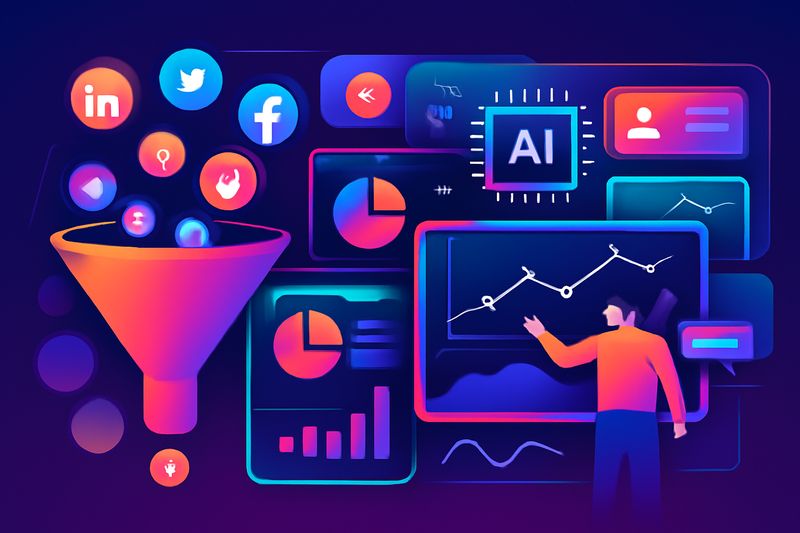
In the hyper-competitive market of 2026, AI-powered customer segmentation is not just an option; it's a necessity. Businesses that harness artificial intelligence to understand and group their customers see a significant increase in ROI — up to 30% according to a recent Gartner study. This involves using algorithms to analyze large data sets, enabling marketers to craft deeply personalized campaigns that speak directly to the customer’s needs and preferences.
The Impact of Personalized Marketing
Personalized marketing strategies developed from AI-driven insights are proving to be game-changers. A study from McKinsey highlights that businesses leveraging AI for personalized marketing achieved a 75% increase in customer engagement. When Indian e-commerce giant Flipkart adopted AI-driven strategies, their conversion rates improved by 47%. Such data reinforces that personalization isn’t just a buzzword; it’s a critical component of modern business strategy.
Real-World Examples: Who's Leading the Charge?
Look at Indian fintech leader Paytm. By integrating AI in their customer segmentation, they fine-tuned user interactions and personalized offerings, which amplified customer retention and revenue streams. Globally, Amazon continues to break new ground, utilizing AI to predict purchases and personalize marketing — processes attributed to an annual revenue increase surpassing $2 billion.
Why 2026 is the Year of AI-Driven Segmentation
As we move into 2026, the landscape is marked by rapid technological advancements and changing customer expectations. AI is no longer the future — it’s the present. Businesses sticking to outdated customer segmentation methods risk not only poor performance but also obsolescence. Integrating AI with segmentation strategies allows for a granular level of understanding that’s essential for targeting and relevant marketing.
Buzz Craft Maven is at the forefront of this evolution, helping businesses like yours leverage AI to understand customer bases in unprecedented ways. As customer expectations continue to skyrocket, personalized and data-driven marketing strategies will be the key to maintaining competitive advantage.


